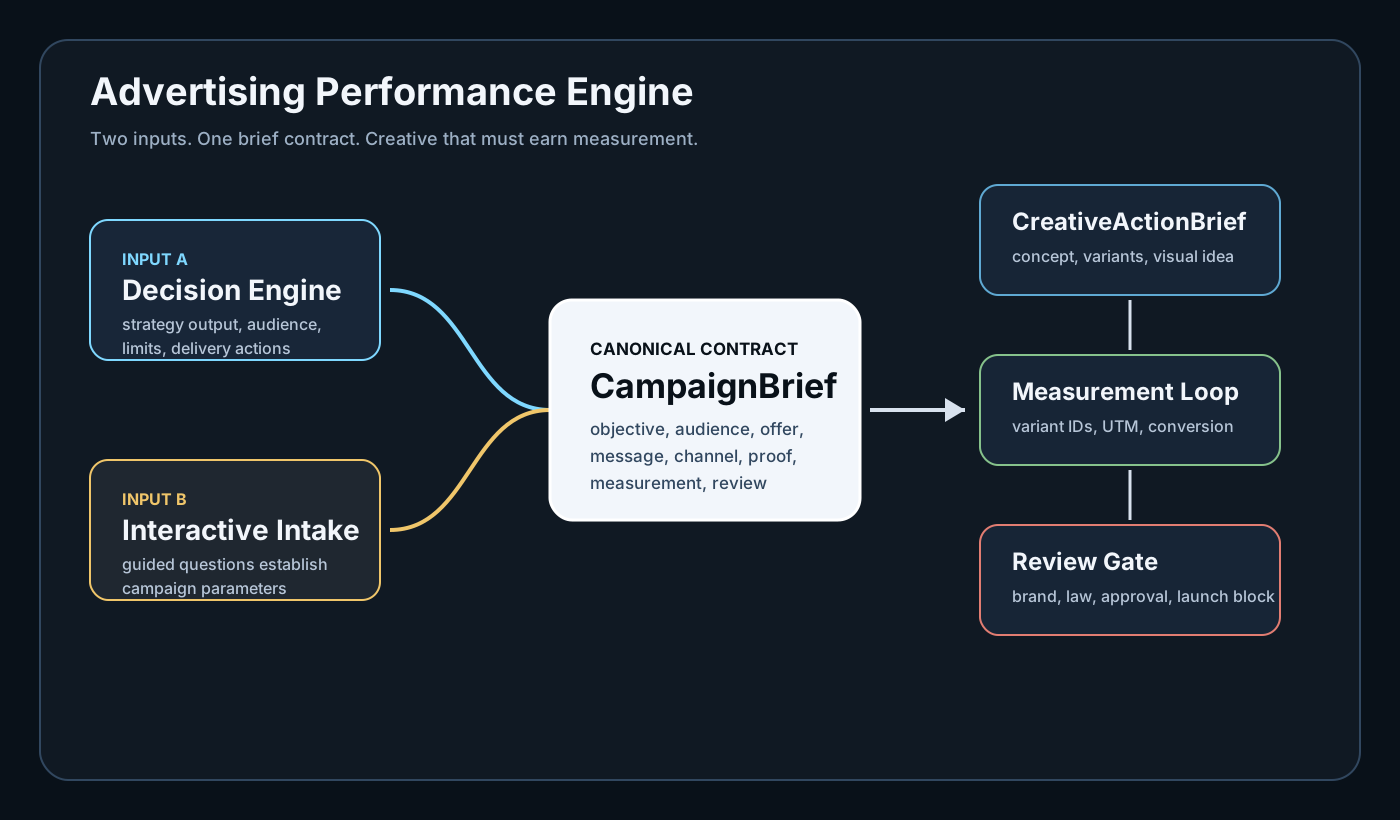
The first production slice is now explicit: one end-to-end local runner, durable local run registry, 24-case deterministic canary, CampaignBrief-to-CreativeActionBrief generation, creative territory and image-prompt specification, governed Google image generation, CreativeActionBrief-to-CompositionSpec generation, creative scoring, brand-asset validation, composition rendering, design-handoff packaging, GIMP adapter packaging, Figma plugin packaging, and platform export profiles. A draft can pass, revise, or block before anything moves toward campaign deployment.
End-to-End RunnerRuns either interactive intake or Decision Engine handoff through CampaignBrief, CreativeActionBrief, score, CompositionSpec, asset validation, and rendered preview. Both required fixture paths pass.
24-Case CanaryCovers both input modes, paid channels, objective variants, immigration-specific civic framing, positive Liberal opportunity framing, legal limits, malformed inputs, adversarial visible-copy leak cases, 50-point creative scoring, pass/fail language-style vocabulary, validation, and rendered-preview artifact checks. Latest deterministic run: 24/24 pass.
Local PersistenceSaves run records, generated artifacts, score, validation state, review boundary, and artifact paths under a durable local registry. Current registry has both required paths passing.
Creative GeneratorTurns a governed CampaignBrief into a CreativeActionBrief with campaign line, key visual, audience insight, evidence asset when needed, variants, platform specs, measurement, risk review, concept type, persuasion stage, frame contract, legal/publication classification, second-frame audit, messenger evidence card, medium-fit note, satire legal-risk note, and opponent clip test. It now routes immigration permission-frustration before positive Liberal offer language, so immigration-pressure briefs lead with “Why can’t we talk about it, Albo?” instead of generic relief copy. The same fixture then tests “More people. Fewer homes. Same excuses.” and “They told you not to talk. You paid the rent.” Positive Liberal offer output remains separate, testing “Let families breathe again.”, “Make work worth it again.”, and “A stronger country can help more people.” Current generated immigration fixture scores 47/50 with verdict pass.
Composition GeneratorTurns CreativeActionBrief into layered CompositionSpec JSON for the visual workbench. It generates background, evidence, headline, body, call-to-action, legal, export, and review layers; the generated fixture passes asset/composition validation.
Design Handoff PackageTurns a CompositionSpec into a Figma/Photoshop-ready local package: layer manifest, linked asset manifest, editable copy sheet, platform export brief, adapter notes, and review boundary.
GIMP Runtime ExporterTurns a CompositionSpec into a GIMP-ready package and now runs GIMP headlessly on Albert to place registered raster assets, produce real layered XCF files, and export full-canvas PNG drafts.
Figma Adapter PackageValidates Figma auth without embedding the token, then turns a CompositionSpec into a local development plugin package with manifest, code, UI, composition data, layer mapping, embedded image-fill payloads, run notes, and review boundary.
Creative Territory PackTurns CreativeActionBrief output into five art-direction territories with named first and second frames, symbolic bridge scores, messenger profiles, evidence class, medium recommendation, backfire risk, image prompt specs, negative constraints, platform crop notes, art-director review questions, and a prompt-review boundary before any image generation.
Google Image CandidateGenerates a governed Google Gemini image candidate from an approved territory prompt, registers it as a review-required generated asset with provenance and SHA-256, then places the raster into GIMP and Figma draft packages with publication still blocked.
Scoring HarnessScores audience truth, strategic tension, alignment to strategy, offer clarity, visual idea, verbal idea, emotional impact out of 10, testability, and symbolic bridge. Language style is pass/fail on approved voter-facing vocabulary, not a numeric score. Legal/publication classification is a separate law gate, not a creative score. The harness penalises jargon, long sentences, abstract phrases, missing concept type, missing persuasion stage, missing frame contract, positive-offer drift inside immigration permission frames, absent messenger evidence, absent medium fit, legally unsafe factual assertions, and variants that do not test one primary hypothesis. Creative-quality revisions are separated from law gates; political advertising limits are defined by law only, and inferences are not factual claims merely because they are sharp. Current deterministic gate is a floor check, not a frontier creative judge; independent review found the next upgrade must make symbolic bridge and verbal quality earned rather than template-filled.
Asset ValidatorChecks brand kit, rights, provenance, approved contexts, forbidden contexts, review status, and composition layer asset references.
Asset LibraryShows reusable brand tokens and asset registry items with rights, review state, approved contexts, forbidden contexts, and production readiness.
Open assets.
Intake SurfaceAccepts Decision Engine handoff JSON or direct user intake and normalises both paths into a CampaignBrief preview.
Open intake.
Review WorkbenchTurns CompositionSpec JSON into a browser-renderable draft with layer selection, local review persistence, editable comments, approve/revise/block state, and exportable review JSON before Figma, Photoshop, or deployment adapters.
Open workbench.